

Recognizing National Day for Truth and Reconciliation
This September 30 marks the third anniversary of National Day for Truth and Reconciliation for Canada. This day holds profound importance, serving as a time to honour the survivors of residential schools, their families, and the Indigenous communities affected by the long-standing legacy of this dark chapter.
In operation for over a century, the residential school system forcibly removed over 150,000 Indigenous children from their families and communities, all with the aim of systematically erasing Indigenous language, tradition and identity through the assimilation of the population into Canadian culture.
The impact of this system continues to reverberate today in Indigenous communities, contributing to continued intergenerational trauma, loss of culture and ongoing struggles.
Acknowledging and understanding this history is essential for healing and reconciliation, allowing Canadians to confront the painful truth of colonization and its enduring consequences.
On Sunday, September 29, I will be attending the National Day for Truth and Reconciliation event in Maple Ridge, co-hosted by PLEA with Katzie First Nation, Fraser River Indigenous Society and BC Spokes.
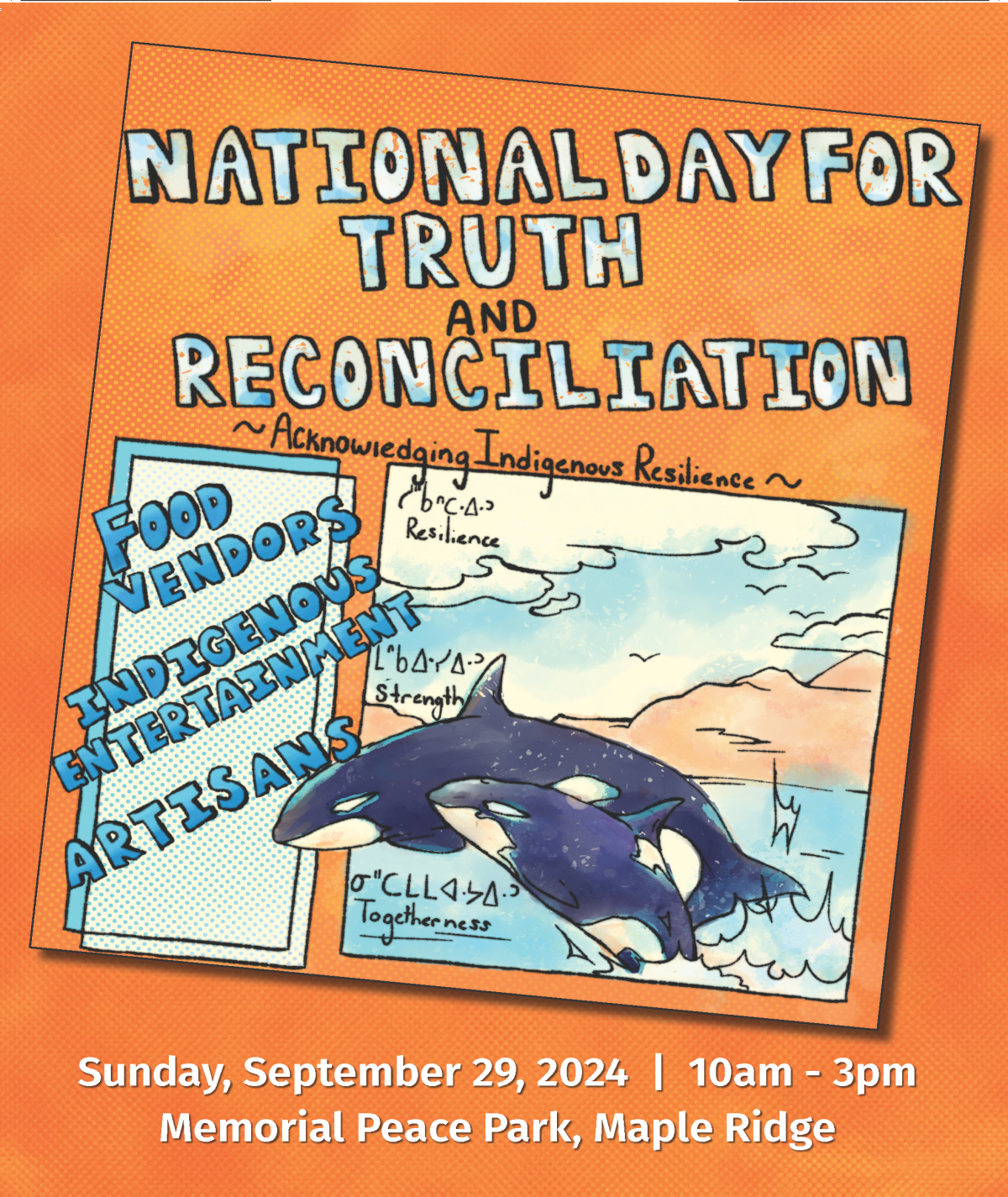
The event, called “Acknowledging Indigenous Resilience” serves an opportunity for me, and those who attend, to take another step forward in our personal journeys toward Truth and Reconciliation. More details can be found here.
While other ceremonies observing the National Day for Truth and Reconciliation will be held on September 30, the event co-hosts, guided by Katzie First Nation, opted to host this ceremony a day early, allowing the Nation to hold their own gathering and ceremonies in private.
On September 30, I plan to connect with and hike the unceded land of the Pitt Lake Bird Sanctuary, near my home. This pristine land is a representation of the undisturbed First Nations lands before the settlers arrived and colonization began.

This will be a reflective day, rather than a celebratory one for me.
I’ll be thinking about the harm and trauma caused by Canada’s residential school system and of the lost children who never returned to their families and their communities.
I’ll be thinking about the inter-generational trauma suffered by those who did return and of the struggles they and their descendants still grapple with today; substance use, disconnection from their Indigenous culture, discrimination and stigma, as well as ongoing policies that continue to perpetuate the inequities that we’ve seen for many years and that we continue to see today.
I’ll ask myself why Indigenous people are over-represented in the federal correctional system? In 2020-21, incarceration of Indigenous people in Canada was 9 times higher than non-Indigenous people. [1]
I’ll will ask myself why there have been 6 times more missing and murdered Indigenous women and children than non-Indigenous females. [2]
And I’ll also ask myself why Indigenous children and youth, who represent just 8% of children in Canda, make up almost 54% of those in care? [3]
Sadly, these questions tell me that we, as individuals and as a community, still have a lot of work to do on the journey towards Truth and Reconciliation.
So, I leave you with this thought. Please remember that this day is not just a time for remembrance but also an opportunity for action.
You may be asking yourself what you can possibly do that will effect change. It can be as simple as wearing orange, supporting Indigenous businesses, talking to your kids or parents about the subject, or reading a book by an Indigenous author. My personal recommendation is a book I read recently called “5 Little Indians” by Canadian Cree writer Michelle Good. You can purchase it here.
Sincerely,
Tim Veresh, Chief Executive Officer
