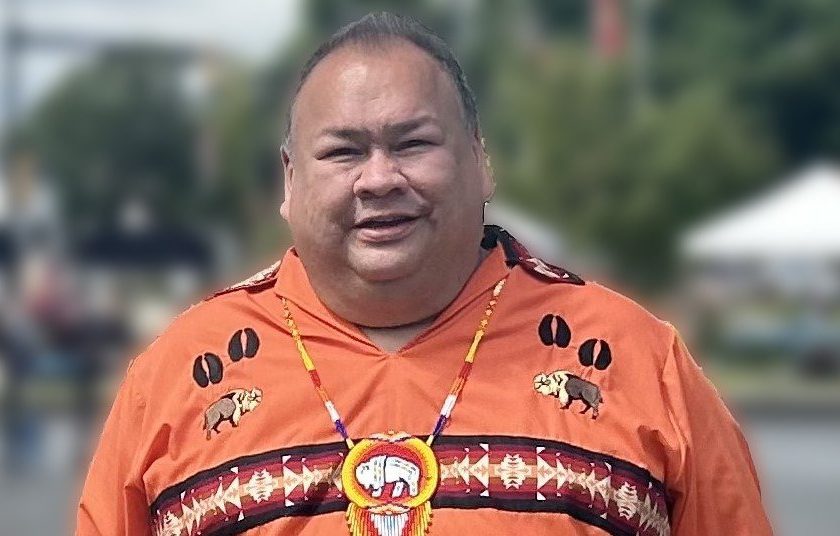
Ernie’s Picks
Book reviews with a personal storytelling approach
Paying the Land by Joe Sacco
I was asked to join a good friend of mine for lunch. This friend of mine is a non- Indigenous teacher who has always lived a life of acceptance of diverse cultures: but he is always the first person to question and debate why we do what we do… so when I sat down at the table, he asked me…”Land Back… how would that work for the Indigenous peoples? How would they govern such a thing?” And from that question, my journey of understanding of what ‘Land Back’ really means began. ‘Paying the Land’ asks that same question too. And it gets to the heart of that question so well. I had to send my friend a copy via Amazon. Because let’s face it, ‘Land Back’ is a scary question that can polarize our thinking.
This book can really help with understanding how we, as Indigenous people, can be on totally opposite sides of the spectrum of what ‘Land Back’ means. But the only way to understand it is by needing to understand first: where we came from and where we stand now. I hope reading this book will help you, as it helped me, to understand the importance of what land stewardship is and why we strive to continue our connection with the land.
And get this! It’s a graphic novel! From an award-winning investigative reporter. Stan Lee couldn’t have done it better!
First Nations 101 by Lynda Gray
This book is perfect for trying to understand the multitude of different issues and challenges that arise in the Indigenous communities; and more so how these issues affect everyone in Canada. Sometimes, there are so many different issues that we can’t see the tree for the forest. It can get overwhelming and difficult. So difficult that most of us don’t want to wrap our heads around it. That is why this book is perfect for people like you and me.
This book’s approach is like taking small bites of an extra-large meal. Nice and easy. Each chapter is a few pages at most! And every question that you may have always wanted to ask an Indigenous person is in there! It really is a book to get a good, firsthand understanding of what we are doing and what we’re going to do.
21 Things You May Not Know About the Indian Act by Robert P.C. Joseph
This is one of those books that you pick up and can’t believe what you’re reading… like how can a country as amazing as Canada do this? Surely it can’t get any worse. Then you start the next chapter… OMG is it really that BAD… by chapter 7, it is hard not to see why we have so many marginalized people and so much trauma interwoven into our lives. It can seem so bleak. Even the most optimistic person would feel bitter and overwhelmed. But then, this book, and the other books listed here, are not designed to make you feel that way.
In fact, I believe the authors shine a light of hope and understanding, and they describe a startling depiction of an Indigenous people struggling to remain true to their heritage. These authors paint a picture of how we can work together. After finishing this book, I was inspired to push all my chips into the pot! Yup. I’m all in. I know I can make a difference…I hope you will be too, after checking it out.
Five Little Indians by Michelle Good
In my picks of books to help you understand the Indigenous perspective/ our way of life/ the adverse effects of colonialism…I thought about the hundreds of amazing, inspiring, and powerful books being written by notable Indigenous writers and activists; and how each book is able to bring light to every dark corner of the world. How can I pick only a few to start you off. That is when I realized as an educator in Truth and Reconciliation, I can get stuck into statistics and facts. In other words, like Joe Friday says, “just the facts ma’am”. This is why I picked a non-fiction book because it describes the human condition better and more truthfully than any statistical fact could ever hope to.
When I read this book, it was like I was transported back to my own youth…my own struggles…and my own fears. This book is great because it talks from the heart and shows you the truth. It is sad at times, even ugly, but it is so very beautiful in the end.
Stand Off: Why Reconciliation Fails Indigenous People and How to Fix it by Bruce Mcivor
When I offered to pick ‘Stand Off’, I was worried that no one would want to read a lawyer’s essays and reports on government policy and procedures…I mean…normally I would run the other way. BUT Mr Mcivor has a heart of a poet who is able to find humour and honesty even in the darkest places. Moreover, when I read his book, it was like looking in a mirror. I have experienced many of these experiences talking to well-intended people about Truth and Reconciliation.
Therefore, I hope you give this amazing book a read, because it is my hope that when reading this book, you may feel like you are looking into a mirror…or into your own heart.
Heck, if anything, at least please read pages 180 to 183…it will help you understand.
Any book by Richard Wagamese
My favourite Indigenous author of all time. His book, ‘Keeper’n Me‘, made me cry and helped me through some difficult times. It is amazing how words on sheets of paper can change a person’s life.
Every one of his books do that…be it about residential schools, addiction, abandonment and attachment, or finding your way home. He is able to touch your soul in a way only a true Indigenous storyteller could, by speaking the truth and sharing Word Medicine.
I hope these books touch you and teach you as much as they did me.
In the Spirit of Friendship,
Ernie Cardinal, B.A. CYCC